When BCHS embarked on a program to make cancer prevention, screening and treatment accessible to people of refugee backgrounds, an initial focus group revealed the immense challenge ahead.
“Everyone with cancer will die so there is no point getting treated,” said one participant.
“If I know I have cancer, I won’t get treated because it cannot be treated,” reiterated another.
This Cultural Diversity Week, the Cancer Support for People of Refugee Background in Bendigo program team is reflecting on the headway made in the three years since their program launched.
The wins have been encouraging, with hundreds of people of refugee background now equipped with knowledge of and access to culturally-safe cancer prevention, screening, treatment and care.
The losses have been profound, says Cultural Diversity and Relationships Facilitator, Abbie Lockwood.
“We unfortunately started seeing really late-stage diagnoses exclusively within our Karen community, poor engagement with health services and just really tragic outcomes,” Abbie says.
From 2023, BCHS has partnered with Loddon Mallee Integrated Cancer Services to implement this State Government-funded program.
In that time, the team has developed resources for both community members and health professionals. They’ve delivered in-person sessions, and they’ve held many hands, for a major aspect has been supporting people to navigate cancer treatment.
“Everything about our health service, everything about our systems, everything about medication, pharmacies, scripts – it’s all new,” says Abbie.
Much of the program’s achievements are due to the bi-cultural staff who help drive it – such as Boe Htoo.
Before arriving in Bendigo, Boe Htoo spent 32 years living in a refugee camp on the Thai-Burma border, where for nine years she worked in the camp hospital.
“When we lived in the camp in Thailand, we couldn’t refer people for treatment, and they died,” Boe Htoo says.
“That’s why when they hear the word ‘cancer’, they believe it’s a disease that can’t be treated.”
Boe Htoo’s lived experience allows her to provide impactful emotional and spiritual support, and to advocate for others as she supports them to navigate the complexities of cancer care.
Today, the feedback from program participants is very different to what was shared in that original focus group. People of refugee background have reported:
“We know it is easier for treatment if we find the cancer when it is small.”
“Prevention means doing something for our health even when we feel well.”
“Before, I threw the bowel kit away because I didn’t know what it was.”
“In my experience, I learnt that when someone has cancer, it can’t be treated. I now know that if cancer is found early it can be treated.”
And those who have had the support of Boe Htoo as they endure cancer treatment say:
“We feel better understood when we are speaking with someone who understand our background.”
“We feel more comfortable, we do have more energy, and we feel supported that bicultural worker supports us during the treatment and appointment.”
“It has made a big difference for us and for our family. Sometimes it is difficult for us to understand medical information and ask the question. The bicultural worker helps explain things in our language and asks the questions our behalf. This make us feel more comfortable, feel safe and less stressed.”
For now, this vital work of the Cultural Diversity team continues, on limited funding, while they search for avenues to fund a permanent model.
Cancer Council Victoria recently highlighted the team’s work. Read the full story here Restoring hope to a community
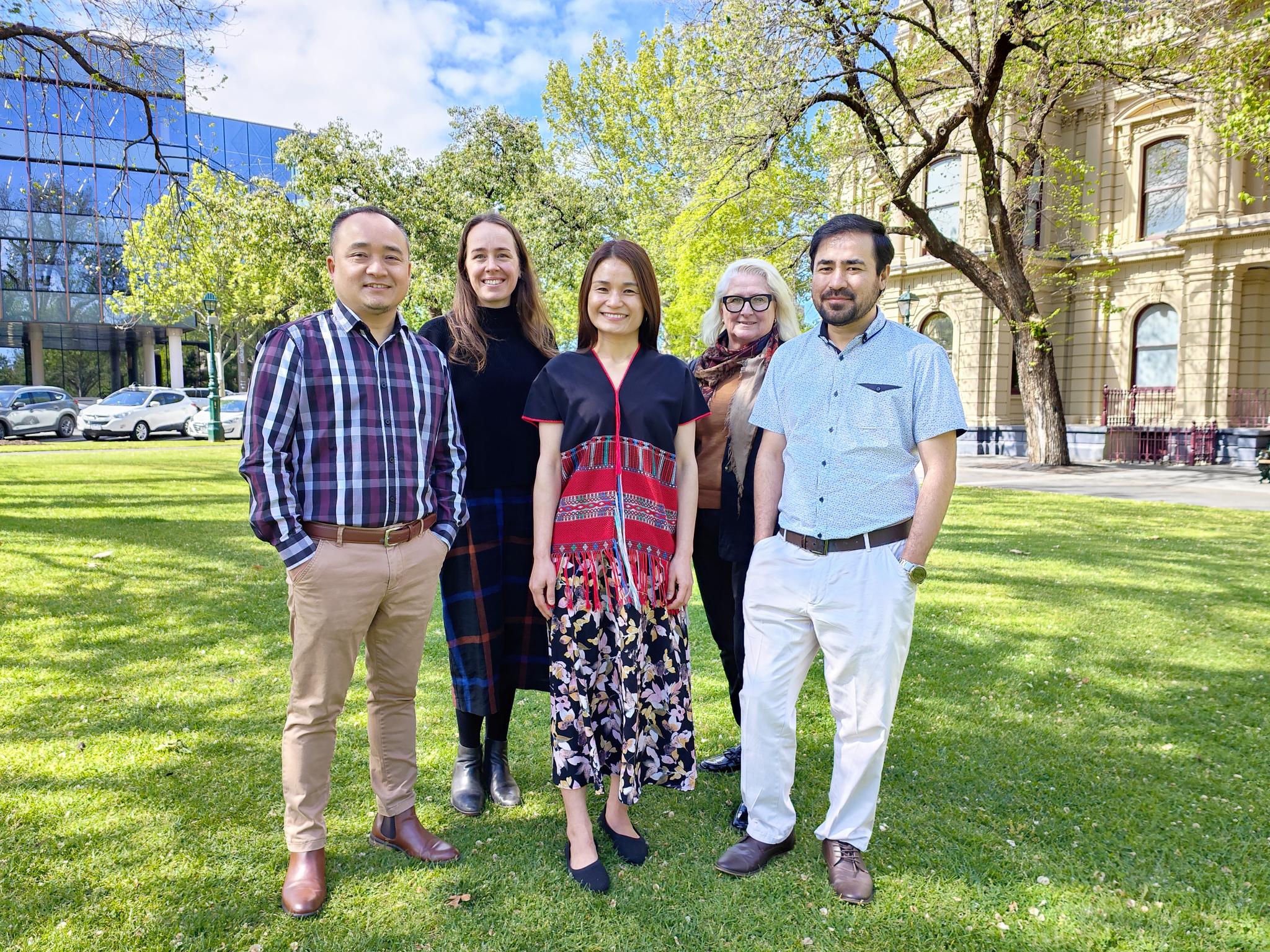
Pictured above: BCHS’ Cultural Diversity staff Nido, Abbie, Boe Htoo, Kaye and Zahir are addressing cancer support for people of refugee background.